Brief
In London, thousands of bicycles are scrapped each year. Many are still functional, but most are simply too complex to be worth repairing in high-throughput recycling systems.
At the same time, the spaces where young people once learned practical skills have been steadily disappearing. Over the last decade, sustained cuts to youth service funding have led to the closure of more than 1,200 youth centres across the UK since 2010. Access to tools, mentors and safe places to learn by doing have narrowed, particularly in communities where funding cuts have made the greatest impact.
Big Bike Build sits precisely at the intersection of these two losses. It treats discarded bicycles as latent infrastructure for learning, and shared making as a way to build confidence in young people.
A repairable machine in a throwaway system
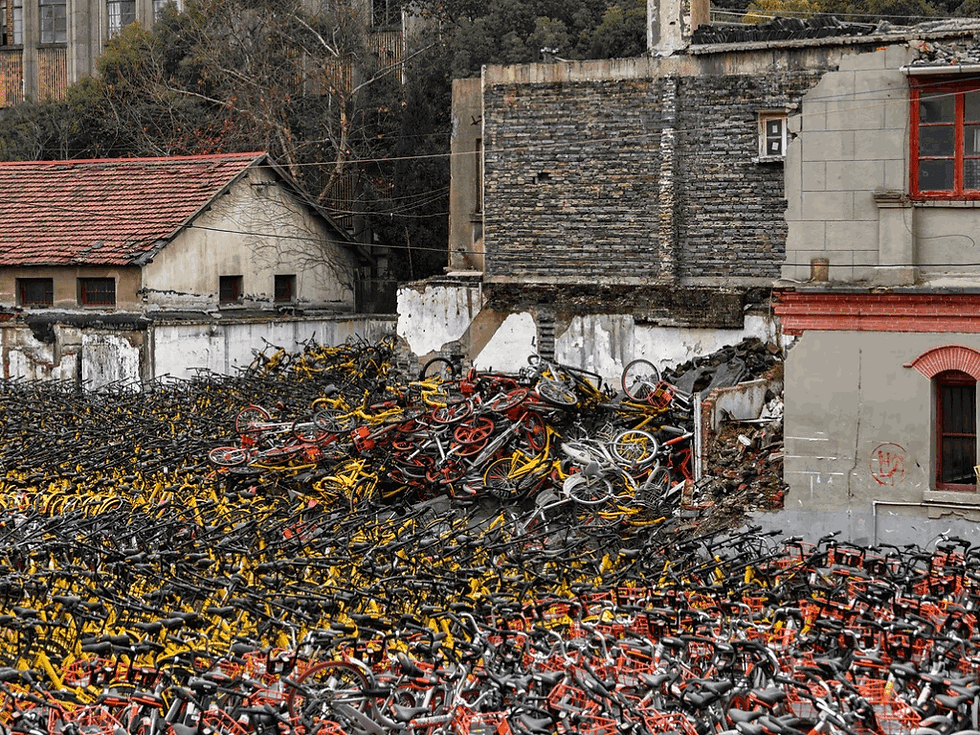
The project began with witnessing the vast scale of bicycle waste in China, and later again in the UK through visits to recycling centres, where thousands of frames and wheels are processed each day. In London alone, over 11,000 bicycles are sent to landfill every year.
The bicycle is one of the most democratic machines ever produced. It is modular, repairable and understood almost everywhere. Yet even this familiar symbol of sustainable transport is now being pulled into wasteful cycles of use and disposal.

Bikes as a teaching tool
The core of the project is a low-cost, CNC-cut plywood bicycle frame designed to be built by young people using salvaged parts.
It's inspired by my experiences building bikes when I was young from parts I would restore myself.
This is a subtle but important strategic shift. The frame is not positioned as a final product, but as a learning interface. It turns construction itself into the primary experience.

Angell Town
Angell Town in Lambeth is one of the most deprived estates in the UK, with high levels of child poverty and youth violence well above the London average. In this context, access to safe, constructive spaces for young people is essential.

Shaped by constraints

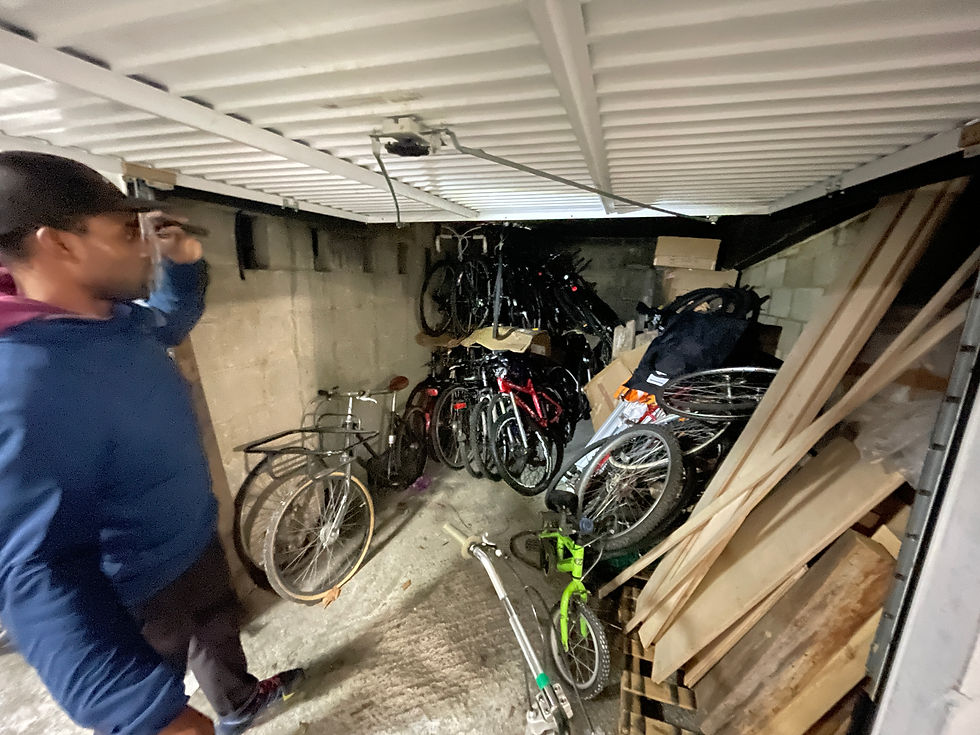
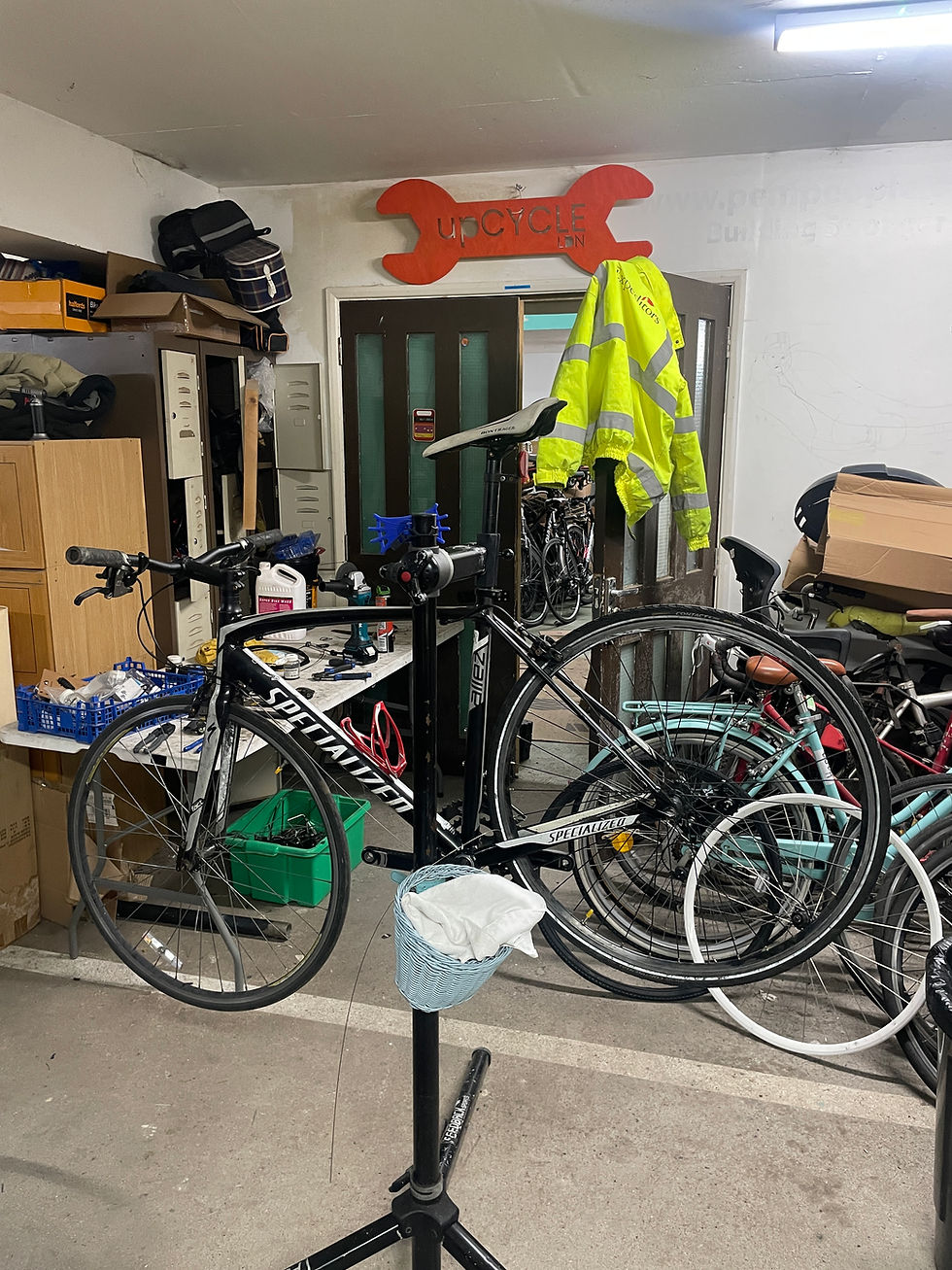
I developed partnerships with Brixton based charity upCYCLE LDN, who refurbish donated bikes for young people.
Bike donations vary in size, condition and quantity. Matching the right bike to the right rider is a persistent challenge.
Rather than designing around an ideal supply chain, Big Bike Build was shaped around this reality. The plywood frame can be produced on demand in multiple sizes, while components can be harvested from otherwise unusable bikes. This shifts the system from one of dependency to one of production.


Design development
Early concepts moved quickly from sketches, to cardboard into CNC-cut plywood.
Each prototype was tested not only for structural performance, but for how clearly it communicated its own logic to first-time builders.
Collaborative testing

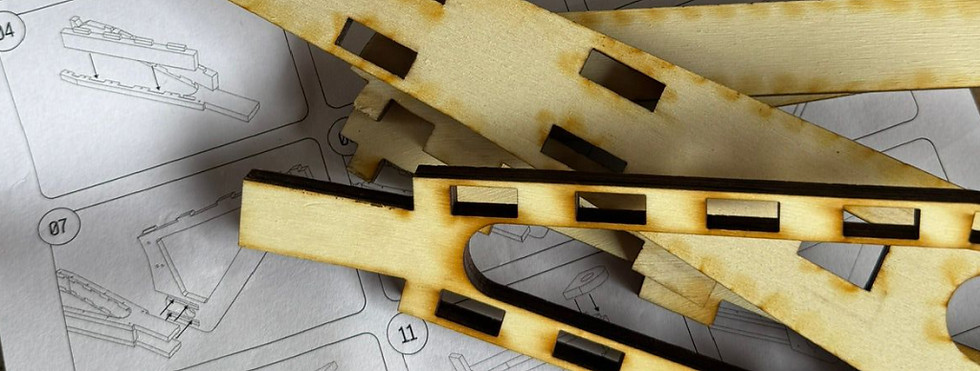
Workshops became live research environments. Young people, charity staff and volunteers shaped the evolution of joints, tolerances and build order and scrap parts dictated geometry.
What emerged is a system that accounts for different components and rider sizes.
It also acts as a canvas for young people to create their own designs.


The final frame
Assembled like a giant jigsaw, the frame is designed to accommodate a wide range of components from salvaged bikes.
Joints are visible and the build sequence is designed so that each stage reveals more about how the full system operates.

Preparing for the workshop
The first Big Build took place at Imperial College London. Details were included that would make the experience more meaningful for participants.
Multitools
Those with the tools are in charge of the build, inspiring leadership and sharing of responsibility. Participants were encouraged to share so everybody could get a turn.
Role Shift
Wearing gloves and coats triggered an identity shift
From onlooker to builder, inspiring a sense of ownership and agency.
Shared Decisions
Choosing and fitting parts gave participants control over the finished bike. They might prioritise speed or comfort, for example.
Customisation
Decorating the frame created expression and ownership. Naming the bike anchored memory and meaning.
The Build
In total, 12 young people from the Angell Town estate in Brixton attended to help build the bike. They worked collaboratively, learned mechanical skills and left feeling proud of what they had made together.


Supporters
Strong partnerships with upCYCLE LDN, Brixton Wings and DB:MX were essential to bring Big Bike Build. The project would simply not exist without their generous support and enthusiasm.



What's next?
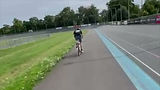
The next phase of Big Bike Build focuses on refining the frame and build process to make a kit for youth organisations.
In parallel, I am lworking on a new project with upCYCLE to build furniture with young people using salvaged materials for a new community hub.
